
Archive
Mammoth Announces Gold Recoveries Of 87% From Bottle Roll Tests On Coarser-Fraction Material From The Large Carneritos Area On Its Tenoriba Gold-Silver Property, Mexico
 | |||||||||
Toronto, Canada (February 5, 2026) – TheNewswire - Mammoth Resources Corp. (TSX-V: MTH), (the “Company”, or “Mammoth”) is pleased to announce results from bottle roll tests performed on a coarser fraction composite sample of oxidized near-surface gold-silver mineralized material collected from assay reject samples of drill holes from the 2021-22 drill campaign, within the large Carneritos area at its 100% owned Tenoriba project, Chihuahua State, Mexico.
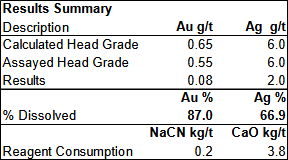
Gold recoveries in a bottle roll test of this coarser fraction, oxidized material passing -10 mesh, or 20 times coarser than material previously sampled in preliminary metallurgical testing from this same composite sample, gave recoveries of 87% gold and 67% silver, results of which compare favourably to gold recoveries ranging from 75% to 90% and silver recoveries around 65% in initial, finer fraction bottle roll testing (refer to press release on the Company’s web site dated November 9, 2023 ). The majority of the gold and silver leaches within the first 12 hours of a total of a 96-hour test. Moving to a coarser fraction, 20 times coarser than prior testing, bodes well for what we can expect from further testing as we advance to small-scale, pilot mineral extraction and heap leach testing as a step towards a future full-scale operation.
Thomas Atkins, President and CEO of Mammoth Resources, commented on these results, stating: "The Mammoth team is excited and encouraged by these results. Gold and silver recoveries in this recent testing are near 90 and 70 percent, respectively. Such recoveries bode well for the ability to recover gold and silver through heap leach processing in the near-surface, shallow oxidized horizon at Tenoriba.”
The gold-silver recoveries from this step-up in grain size are ten times coarser than the material previously tested and we’ve achieved the same elevated gold-silver recoveries we achieved from initial testing. Mammoth personnel and the professional evaluating these test results believe such recoveries are a good indication of the potential for similar elevated gold and silver recoveries in this material as we continue confirmation tests towards pilot and commercial scale production. We had similar gold-silver recoveries in initial fine-fraction leach testing from material collected from historical drilling in the large 1,200 by 250 metre Masuparia area at Tenoriba. That the Carneritos area measures approximately 1,500 by 500 metres and that we’re getting such high gold-silver recoveries in the oxidized, near-surface level of mineralization at Carneritos is an indication of the potential of the project for future, low-cost precious metal production.
We’re now advancing a number of activities at Tenoriba, including: confirming locations of higher-than-average grade material in the near-surface oxidized zones for potential extraction and processing in a small, pilot plant-scale operation, column testing of even coarser fraction material from Carneritos as a lead-up to the pilot plant and seeking an updated quote on our phase one, shallow oxidized horizon drilling to define a maiden mineral resource at Carneritos. We look forward to reporting on these activities in the near future.”
Cyanide Bottle Roll Test Results, Conclusions and Recommendations for Future Work:
All samples are from reject samples of core drilled during the 2021-22 drill campaign within the Carneritos area of the Tenoriba project and had grades approximating 0.65 grams per tonne gold equivalent grade (combined gold and silver with silver grade converted to gold at a 75:1 silver to gold ratio), which is the average assayed grade among all mineralized drill core intervals grading higher than 0.18 grams per tonne gold from within the Carneritos area. This report describes the rationale, method of sample collection, quality control and quality assurance measures, the results obtained from these tests and studies, and recommendations for further work.
All cyanide bottle roll tests were performed at the SGS Laboratory in Durango, Mexico, supervised by German Alarcon, SGS de Mexico S.A de C.V metallurgist and a qualified person. Mammoth Resources personnel performed the sample selection under the supervision of Richard Simpson, Vice President of Exploration for Mammoth Resources, a professional geologist and qualified person at Mammoth Resources.
Gold dissolution recovery (amount of gold dissolved-recoverable relative to the assayed grade) from the coarser fraction, minus 10-mesh, bottle roll test of composite oxidized coarser-grained material is 87%, and silver recovery is 67%. These amounts compare favourably to gold recoveries ranging from 75% to 90% and silver recoveries around 65% for bottle roll tests conducted on fine-grained (minus 200-mesh) oxidized material, with most of the gold and silver dissolved/recoverable within the first 12 hours. Considering the coarse-grained nature of the material tested, cyanide consumption (0.2 kg/t) is considered low, while CaO consumption (3.8 kg/t) is considered on the higher end of average.
Sample Grade, Dissolution, and Reagent Consumption
Recommendations for future work include additional metallurgical testing on, among others, even coarser-grained, near-surface oxidized and oxidized-transition zone material, possibly in bottle roll tests, or column tests. Sulfide-bearing material should also undergo additional testing to understand leaching kinetics, including bottle roll tests with higher cyanide concentrations to determine whether, with changes to the leaching dynamics, recoveries can be improved.
Additional testing would include samples from portions of the drill core, or extracted from surface “draw-points” to create a similarly representative near-surface, oxidized–oxidized/transition sample(s) and from drill core to extract a sample(s) of deeper, below the oxidized material level, sulfide sample. This material should be crushed and screened for the desired 3/8-inch diameter size fraction, followed by column testing to determine leach kinetics. These tests would further validate and enhance the confidence of the metallurgical recoveries of gold and silver by cyanide heap leach methods, plus the consumption of reagents to achieve the most favourable gold and silver recoveries and the potential economics of this process.
Based on the success of this recent testing, Mammoth intends to collect sample(s) to further this metallurgical testing on a 3/8-inch, coarser fraction of the oxidized and mixed oxidized-sulfide zone material. As this near-surface material will be the first to be extracted in any mining operation and has such favourable leaching kinetics, this material will be the priority for near-term, future testing. Additional testing of sulfide material will be conducted at the appropriate time relative to the definition of this material within the deposit.
Mammoth intends to post to its website (“Projects”, “Technical Reports” section) in the coming days a technical report detailing this coarser fraction oxidized material and preliminary sulfide, metallurgical study.
The Company looks forward to reporting on additional development activities at Tenoriba, including additional metallurgical testing and resource definition drilling.
Quality Assurance and Quality Control (QA/QC):
Samples were selected from sample rejects of drill core recovered by Mammoth Resources personnel from Australian Laboratory Services (ALS) preparation laboratory, Chihuahua where they had originally been prepared for drill core assay analysis of drill holes drilled within the Carneritos area of the Tenoriba property during the 2021-2022 diamond drilling program. Drill core assay results, plus Quality Assurance/Quality Control (QA/QC) measures were previously reported in various press releases (refer to Mammoth Resources website press releases spanning the period November 18, 2021, to December 15, 2022).
Sample selection and preparation for cyanide bottle roll testing were performed by Mammoths personnel under the supervision of Richard Simpson at the Chavez ranch outside of Chihuahua city, Chihuahua, Mexico. Details of sample preparation are provided in the report titled: “Report on Bottle Roll Tests of Coarse Oxidized, and Fine Sulfide-Bearing Drill Core Reject Samples, Carneritos Area of the Tenoriba Project, Chihuahua, Mexico, December 2025”, posted to Mammoth’s website: Project section, Technical Reports.
Qualified Person / Quality Controls:
Richard Simpson, P.Geo., Vice-President Exploration for Mammoth Resources Corp. is Mammoth's Qualified Person under National Instrument 43-101 by virtue of his professional designation, university degree and years of work experience as a geologist and is responsible for and has reviewed all technical data in this release (refer to Mammoth’s website “Projects”, “Qualified Person” section for Mr. Simpson’s qualifications).
German Alarcon, Metallurgist for SGS de Mexico S.A de C.V. is an experienced metallurgist. Mr. Alarcon graduated in 2007 from the Faculty of Chemistry at the Universidad del Estado de Durango, Mexico as an Ingeniero en Ciencias de los Materiales. Since graduating in 2007, Mr. Alarcon has worked as a metallurgist for numerous reputable organizations, including Minerales y Minas de Mexico and First Majestic Silver Corp. Since 2018 Mr. Alarcon has been the Metallurgical Laboratory Manager for SGS in Durango, Mexico. Mr. Alarcon is a Qualified Person under NI 43-101 by virtue of his university degree and years of experience as a metallurgist.
Dr. Efren Perez, PhD Geology, is a consulting geologist. From 1977 to 2022 Dr. Perez was a professor of Economic Geology at the Universidad de Sonora, Mexico. Dr. Perez received his PhD in 2006 from the Universidad de Mexico (UNAM). His post graduate studies are from the Ecole Nacionale Superieure des Mines de Paris, France (1975-1976) and Ecole Nationale Supérieure de Géologie Appliquée et de Prospection Minière, Nancy, France (1977-1979). Dr. Perez is a Qualified Person under NI 43-101 by virtue of his university degrees, academic studies and years of experience as a professor of Economic Geology at the Universidad de Sonora.
About Mammoth Resources:
Mammoth Resources (TSX-V: MTH) is a precious metal mineral exploration Company focused on acquiring and defining precious metal resources in Mexico and other attractive mining-friendly jurisdictions in the Americas. The Company holds a 100% interest (subject to a 2% net smelter royalty purchasable anytime within two years from commencement of commercial production for US$1.5 million) in the 5,333-hectare Tenoriba gold property located in the Sierra Madre Precious Metal Belt in southwestern Chihuahua State, Mexico. Mammoth is seeking other opportunities to option exploration projects in the Americas on properties it deems to host above-average potential for economic concentrations of precious metals mineralization. Mammoth recently entered into a strategic alliance with RM Mineria S de RL de CV of Mexico in pursuit of additional project development opportunities.
To find out more about Mammoth Resources and to sign up to receive future press releases, please visit the company's website at: www.mammothresources.ca., or contact Thomas Atkins, President and CEO at: 416 509-4326.
Neither the TSX Venture Exchange nor its Regulation Services Provider (as that term is defined in the policies of the TSX Venture Exchange) accepts responsibility for the adequacy or accuracy of this release.
Forward Looking Information: This news release may contain or refer to forward-looking information. All information other than statements of historical fact that address activities, events or developments that the Company believes, expects or anticipates will or may occur in the future are forward-looking statements; examples include the listing of its shares on a stock exchange and establishing mineral resources. These forward-looking statements are subject to a variety of risks and uncertainties beyond the Company's ability to control or predict that may cause actual events or results to differ materially from those discussed in such forward-looking statements. Any forward-looking statement speaks only as of the date on which it is made and, except as may be required by applicable securities laws, the Company disclaims any intent or obligation to update any forward-looking statement, whether as a result of new information, future events or results or otherwise. Although the Company believes that the assumptions inherent in the forward-looking statements are reasonable, forward-looking statements are not guarantees of future performance and, accordingly, undue reliance should not be placed on these forward-looking statements due to the inherent uncertainty therein.